Thursday, March 6, 2014

Following up from the Dove commercial we saw in class, I remembered when this image was circulating the web:


There is a huge contrast and I think it creates a positive image for the Dove campaign compared to the Victoria Secret campaign. Dove's campaign is more relatable to the average woman whereas the Victoria Secret campaign depicts the "ideal" female figure. Although VS encourages women to "love their bodies," the focus of the ad does not reflect an average woman. On the other hand, Dove encourages women to accept themselves despite their differences.

Wednesday, March 5, 2014

Oscars Selfie and Samsung's Product Placement


Samsung did a great job during the Oscars of breaking through the confines of the commercial break. As we discussed earlier in class, only 19% of consumers actually watch commercials during TV breaks. Knowing this, Samsung combined product placement with numerous commercials, spending nearly $20 million during the Oscars to help viewers better remember their products.

In particular, the Oscar selfie that went viral was a huge plug for Samsung. Host Ellen DeGeneres used a Samsung Galaxy phone during the show to take a selfie with several A-list stars, which was later re-tweeted over 3 million times on Twitter. While the stunt appeared spontaneous, it wasn't entirely unplanned, as Samsung negotiated to have the Galaxy integrated into the show. It hasn't been confirmed whether the selfie with the Galaxy was planned, but in rehearsals Ellen did mention taking a selfie during the show, and she was trained to use the Galaxy. 

This kind of viral magic can't be achieved through commercials alone, and this is why product placement is such a powerful tool. This is huge exposure for Samsung's Galaxy, which has been competing with the Apple iPhone for some time. Here is an article about the selfie below:

Tuesday, March 4, 2014

Microsoft's "Sexist" New Ad

http://thinkprogress.org/media/2014/03/04/3357881/microsoft-releases-sexist-commercial/#

Above is the link to an article berating Microsoft's new TV ad and the actual ad. It portrays a woman planning her wedding using the Microsoft Tablet. The article describes the ad as a "patronizing approach to female consumers" and that Microsoft is trying to target women because they are increasingly using technology, even though men still dominate the industry. Although, yes, the woman in the ad mentions her wedding, Pinterest, and bridesmaids (very cliche women stereotypes), isn't it still possible that a woman could use this tablet to do such tasks? The article later states, "Its latest effort aside, Microsoft has run a non-stereotypical ad that features a female paramedic, student and XBox gamer — a more inclusive, less cliche take on how women use technology." So if other non-stereotypical ads are also being run, what's so bad about an ad revolving around a woman planning her wedding? 

Vintage Sexist Ads

I was perusing BuzzFeed this morning and come across a link to some pretty outrageous vintage sexist advertisements: http://www.buzzfeed.com/briangalindo/17-ridiculously-sexist-vintage-ads . Based on our discussion in class today, I was really interested in seeing how gender-based advertisements have evolved over the decades. Some of these ads are extremely sexist and clearly depict women as inferior to men. The Van Heusen ads (#14 and #15) show a woman bowing down to as well as being spanked by a man, underlying the theme that Van Heusen clothes are the best to show authority in a "man's world." Putting on a Van Heusen shirt will somehow endow a man with a sense of newfound power and boldness. Given that Van Heusen is a still a well-known mens brand, I'd be interested in learning more about how they brand has evolved its messaging over the years. Another advertisement that I found particularly amusing was #11. Post Grape Nuts. The ad focuses on how Post Grape Nuts can help a woman maintain her figure. If the teenage girl strays from this diet saving trick, she will be outshines by her mother. This advertisement really stuck out to me because instead of debasing women at the expense of men, it pits women against each other. In this manner, a woman is forced to think about how she stacks up against other women as well as how men will perceive her if she foregoes her Post Grape Nuts.

Monday, March 3, 2014

Oscars Trailer

http://www.youtube.com/watch?v=DisioPE86AY


This is the advertising campaign/trailer for the 2014 Oscars that occurred last night, and in my opinion I believe this was an extremely effective campaign.  Ellen is a very well liked and influential figure, and I know in my house every one had to be absolutely silent anytime the trailer came on.  Like we learned about in SNOOP, this trailer demonstrated personality, and more specifically extroversion and openness.  Ellen appeared to be having an outstanding time while creating this video, and this definitely came off in the production of this video.  While sometimes the Oscars tend to be boring to many individuals, this promo put the Oscars in a different light, especially with Ellen as the star of the show.

McDonald's Mighty Wings Dummy Variable

McDonalds initially tried selling their new Mighty Wings (KFC quality) at Buffalo Wild Wing prices $1+ a wing.  This did not reflect a good value for the McDonald's consumer because for $1 they could also get anything on the dollar menu instead of a single chicken wing. 

The result: they got stuck with over 10M lbs of unsold chicken wings, so they started this new promotion that utilized a Dummy Variable (the chicken wings are perishable so they need to get rid of their stock before it goes bad).

Dummy Variable:  Comparing the 3 wings for $2.99 and 5 wings for $3, the 5 wings are clearly superior. With just the 3 and 5 wing sets, 99% of people would get the 5 wing set and be very happy with their decision, they paid an extra penny and got 2 more wings, that creates good value for the consumer.

However, if you are smart like the rest of us at Cornell, you might have also noticed that you can buy 2 sets of 5 wings for $6, which is much cheaper than buying 10 wings for $8.99.  So instead of initially getting just 5 wings you are tempted to get 10 or 15 wings because the second dummy variable gives you the perception you are getting greater value than just getting the set of 5!  This pricing structure creates massive value for McDonald's consumers and also drives the sale of their Mighty Wings which they need to get rid of.


Sunday, March 2, 2014

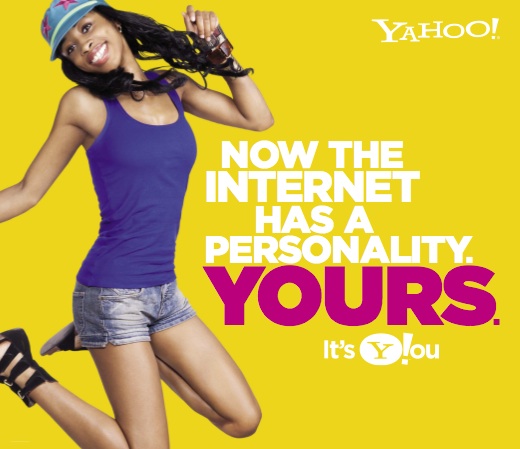
Yahoo! Advertisement Campaign


This print advertisement is from an ad campaign that Yahoo! ran, which strived to stronger connect its brand to each individual customer. The campaign allowed for users to customize their own Yahoo! page and personalize what specific news appeared on their home page. This print advertisement relates to two different concepts which we have been studying in class.

Firstly, Snoop discusses how our personalities seep through in everything that we do. This advertisement shows a woman jumping, which Dr. Sam Gosling said can be a true indicator of personliaty. From this ad, we can see the woman is kicking her legs back and smiling, which indicates she may be extroverted. Although this woman may be extroverted, many other users may have different personalities, which Yahoo! will also strive to accomodate. With Yahoo! attempting to personalize each users experience on their web site, users may be more apt to use the search engine, because it better fits their wants, behaviors, and needs.

Secondly, this advertisement also uses bright colors and bold print in order to gain the attention of their audience. It utilizes the concept of perceptual vigilance, by making the ad campaign targeted to each specific individual. In this advertisment Yahoo! clearly emphasizes the word "Yours," through the use of bright colors and larger font size.  If viewers realize Yahoo! is trying to make the message more personally relevant to them, by connecting with each person's own needs, customers will be more likely to pay attention to the advertisement.